
The Paramount-Warner Acquisition Horror Show: Same Jumpscares, Bigger Body Count
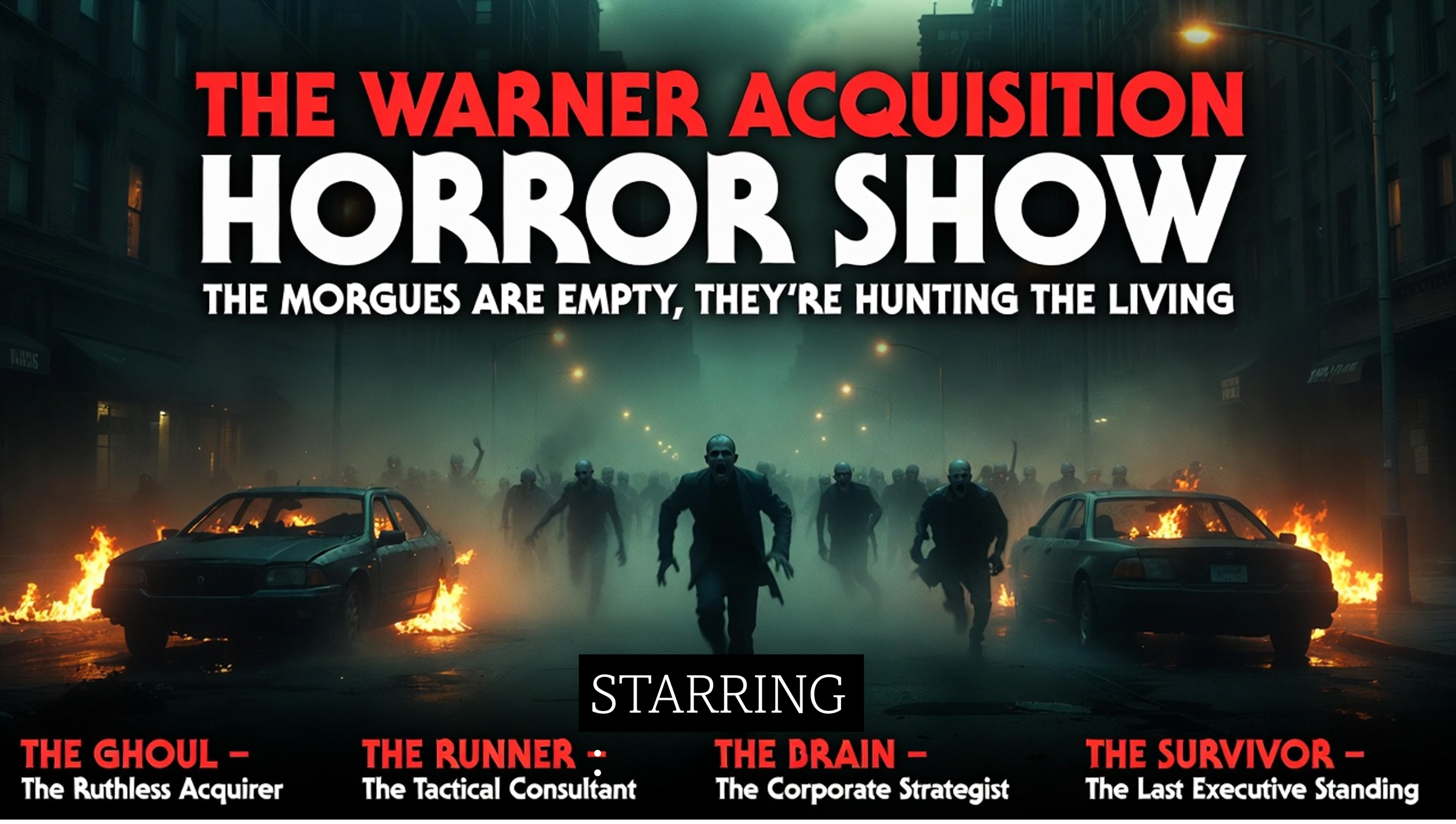
Will Paramount Skydance break the curse… or become the next victim?
Executive Summary
The Paramount Skydance $110 billion acquisition of Warner Bros. Discovery is the latest sequel in Warner’s cursed M&A horror franchise, same jumpscares, same monsters: cultural invaders, crushing debt, and value destruction.
The Acquisition Tribe arrives anxious and armed with fear based behaviors that will trump any good culture unless leaders understand the critical social forces and social nodes and aggressively purge or assimilate those in the way.
Success demands effectiveness first (aligned people, social forces, Dynamic Execution), not spreadsheet efficiency. AI from Skydance can be the game-changing twist, but only if it augments human execution rather than becoming another Consultant Tribe duct-tape fix.
Leaders who ignore these lessons will watch the same movie again; this time with bigger numbers and faster write-downs.
The Details: Why This Sequel Feels So Familiar (and What Must Change)
I have spent years watching companies inject hordes of cultural barbarians through acquisitions and then wonder why their execution culture collapses in months. Warner Bros. Discovery’s story is the franchise that keeps delivering the same scares.
We’ve seen it three times already:
AOL-Time Warner (2001) — $165 billion of “synergies” that became a $99 billion write-down when tech hustle met creative empire and both sides lost.
AT&T (2018) — $85 billion telecom-media dream that ended in a 50% haircut and spin-off because rigid engineering could not coexist with Hollywood storytelling.
Discovery (2022) — reality-TV cost discipline collided with premium scripted DNA, leaving $50+ billion in debt, mass layoffs, and creative blood on the floor.
Now Paramount Skydance steps onto the same fog-shrouded lot promising $6+ billion in annual synergies, a merged Paramount+/Max super-app, and AI-powered magic. The setup is identical: massive pro-forma debt ($79 billion), anxious acquired employees ready to play “kill or be killed,” and a Consultant Tribe already camped in the conference rooms.
In the parlance of The CDX Method, this is the Acquisition Tribe at full strength — ignorant of Core Execution techniques, unkempt in Corporate Sociology, and evil in their willingness to accept mediocrity if it protects their personal survival. They do not need training slides; they need leaders who understand that a poor culture always trumps a good one unless you act with constancy of purpose.
For this sequel to have a different ending, three things must happen immediately:
Ruthless cultural mapping and decisive action. Compare social forces, social nodes, and social rituals pre-close. Identify the lethal barbarians (fear-spreaders, blame-deflectors) and purge them in one painful round so the organization hurts once and then heals. Make the survivors feel safe and convert them into accretive supporters through focused supervisor-employee interactions — not another generic onboarding deck.
Effectiveness over efficiency. Cost cuts, procurement savings, and real-estate consolidation are necessary, but they are table stakes. True value comes from building internal Dynamic Execution capacity — Enterprise Core Processes that bridge silos, talent pipelines that promote value-aligned people first, and culture as a standing KPI in every Leadership Stage review. You cannot spreadsheet your way out of a bad diet of cultural inputs.
Controlled use of the Consultant Tribe. Bain, Centerview, RedBird and the rest (consultants publicly tied to the acquisition) are useful pathfinders, but only if they are required to augment your desired execution culture — not replace it. When conference rooms fill with outsiders doing the hard work leaders should own, it is the clearest sell signal of execution frailty. AI must not become their next buzzword project; it must be embedded into social rituals that enhance creativity and velocity, not replace them.
Skydance’s genuine AI capabilities — cloud-based production workflows, personalized recommendation engines, and Oracle-backed infrastructure — are the one fresh element that previous acquirers lacked. Used correctly, this tech can finally deliver the revenue synergies that AOL, AT&T, and Discovery only promised. But if it is reduced to Excel models and efficiency dashboards without sociological grounding, it will simply accelerate the same old horror ending.
The monster does not have to win this time. Leaders who treat the acquisition as a sociological battle rather than a financial exercise can break the curse. The tools exist; the question is whether this franchise’s new directors have the humility and courage to use them.
What do you think — will Paramount Skydance finally slay the Warner curse, or are we doomed to another predictable jumpscare? Drop your own M&A horror (or success) stories below. I read every comment.
Previous Articles in This Series
Execution Lessons from Hollywood’s Biggest Deal: Culture (January 6, 2026) https://www.linkedin.com/pulse/execution-lessons-from-hollywoods-biggest-deal-culture-geleta-jghze
NVIDIA’s Jensen Huang: “Stay Humble Enough to Pivot” – Humility as a Primary Social Force Behind An Execution Culture (December 13, 2025) https://www.linkedin.com/pulse/nvidias-jensen-huang-stay-humble-enough-pivot-humility-geleta-bhgde
Disclaimer This post reflects my personal analysis and opinions based on the framework in Develop Business Execution Superpower with The CDX Method. It is not investment, financial, legal, or management advice. Every situation is unique. Please consult your own qualified advisors before making any decisions related to mergers, acquisitions, or corporate strategy.