
Stellantis Announces "Year of Execution" - Pardon my Skepticism
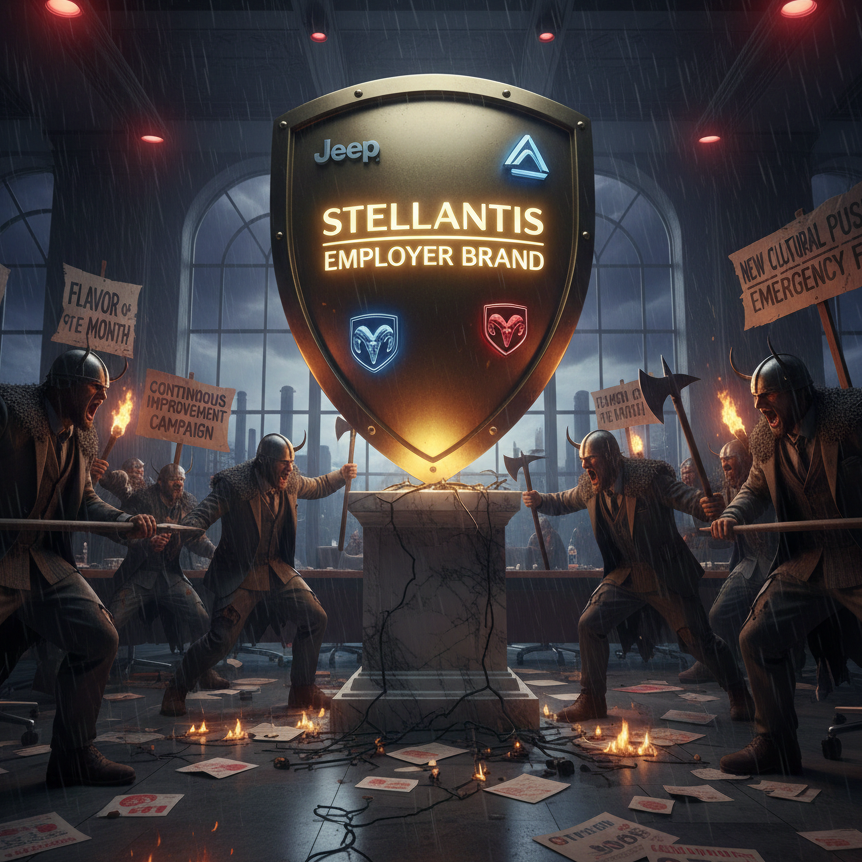
Will Stellantis keep the barbarians at bay? Or will "programs of the year" just fuel more value destruction?
Executive Summary:
Most have never heard of Stellantis (despite it being a global auto giant with hero brands).
The company's history of execution struggles that have cost it billions in sales and profits.
Why new CEO Antonio Filosa's declaration of 2026 as the "Year of Execution" is a refreshing sign of personal leadership accountability—but also feels like yet another short-lived corporate program.
Key lessons from The CDX Method on what genuine, sustained execution really requires from a leader.
Honest questions about whether Filosa truly grasps and will deliver on building an enduring execution culture.
Details
Most people have probably never heard of Stellantis. That's understandable—unless you're deep in automotive, it's not a household name like Toyota or Ford. But this is the company formed in 2021 from the merger of Fiat Chrysler Automobiles and PSA Group, owning iconic brands like Jeep, Ram, Dodge, Chrysler, Peugeot, Citroën, Fiat, and Alfa Romeo. It's a true global powerhouse... that has quietly been bleeding market share and profits due to chronic poor execution.
Fresh news from January 2026: Stellantis' new CEO, Antonio Filosa, just declared 2026 the "Year of Execution" during interviews at the Detroit Auto Show. As shared in this CNBC post on LinkedIn: Stellantis CEO: 2026 is the 'year of execution' as Wall Street awaits turnaround strategy, Filosa views 2026 as the pivotal year to execute the turnaround plan for the embattled maker of Jeep, Ram, and Dodge vehicles in the U.S. He's framing it as the make-or-break period after years of declining U.S. sales (down ~27% since the merger), a 70% profit plunge in 2024, dealer frustrations, and eroded market position. Filosa, a 25+ year company insider who took over in mid-2025 after Carlos Tavares' abrupt exit, is promising focus on Jeep and Ram revivals, Hemi V8 returns, hybrids, affordable models, $13B+ in U.S. manufacturing investments, cost discipline, and cultural shifts toward collaboration, customer focus, and strong regional roots.
The Positive: A CEO Taking Personal Responsibility
It's genuinely encouraging to see a leader step up and say execution is on him. No more delegating the hard work to a tough-guy COO or hoping strategy alone saves the day. Filosa is undoing some of the prior aggressive EV-only bets, prioritizing what customers actually want, and signaling hands-on accountability. In an industry full of flashy vision statements, this kind of ownership is rare and welcome.
The Concern: Does This Smell Like a "Program of the Month"?
But here's the rub—and it's a big one. Labeling 2026 as the "Year of Execution" makes it sound like a finite campaign: grind hard for 12 months, launch some products, report progress at the upcoming Capital Markets Day (slated for the first half of 2026), and then... move on? Execution isn't a New Year's resolution or a quarterly initiative you spotlight and shelve. It's the relentless, day-in-day-out foundation of how any winning organization operates.
I see red flags. The CDX Method warns explicitly against "flavor of the month" programs that launch with fanfare, lose steam when results aren't instant, and leave employees cynical and waiting for the next fad. Without embedding execution as the permanent core of the employer brand—emotionally engaging people forever, avoiding slogans or separate initiative names, and reinforcing it daily—the gains evaporate. Stellantis' post-merger track record (turbulence, rapid pivots, leadership churn) makes this risk even higher. If attention wanes in 2027, we'll be back to square one.
Does Filosa Really Know How to Execute? What The CDX Method Demands
The CDX Method lays out clear, non-negotiable actions for leaders who want to build a tenacious execution culture. Here's a quick list from its foundational chapters—and my direct questions on whether Filosa appears to fully understand and commit to them:
Demand Leadership (Chapter 1: Duty) The leader must personally accept full responsibility for creating and sustaining an execution culture—no delegation, no relying on personality-driven interventions that leave emotional wreckage. Prevent natural employee "self-optimization" that breeds variability and lethargy. Build a system where the organization pivots gracefully to threats without constant crisis mode. Question: Filosa's insider status and hands-on reversals are promising, but will he maintain this daily energy long-term, or slip back into broad strategic tinkering once 2026 headlines fade?
Enhance the Employer Brand with Tenacity (Chapter 2: Tenacity) Make execution the enduring foundation of the company's internal brand—emotionally bond employees to it forever through pride in meaningful work, not perks or posters. Avoid competing initiative names, hollow slogans, or emergency fixes that breed cynicism. Achieve "constancy of purpose" so the culture doesn't atrophy into hazy memory. Question: By spotlighting just one year, is Filosa inadvertently creating brand confusion or signaling this is temporary? Does he have a plan for relentless daily reinforcement beyond 2026, or will employees sense shallowness and disengage?
True execution mastery means living these principles perpetually, not checking a box for a single year.
I'm rooting for Stellantis—reviving Jeep and Ram with real customer focus could be huge. But I'm skeptical this "Year of Execution" becomes the transformative cultural shift it needs to be. Execution wins markets when it's the unchanging heartbeat, not a temporary campaign.
What about you? Have you witnessed "Year of [Buzzword]" initiatives actually stick and drive lasting change—or do they usually fizzle? Let's talk about making execution the real, enduring priority.
#Execution #Leadership #Stellantis #Automotive #BusinessExecution #TheCDXMethod