
Macrohard Versus Microsoft, Its Not a Laughing Matter
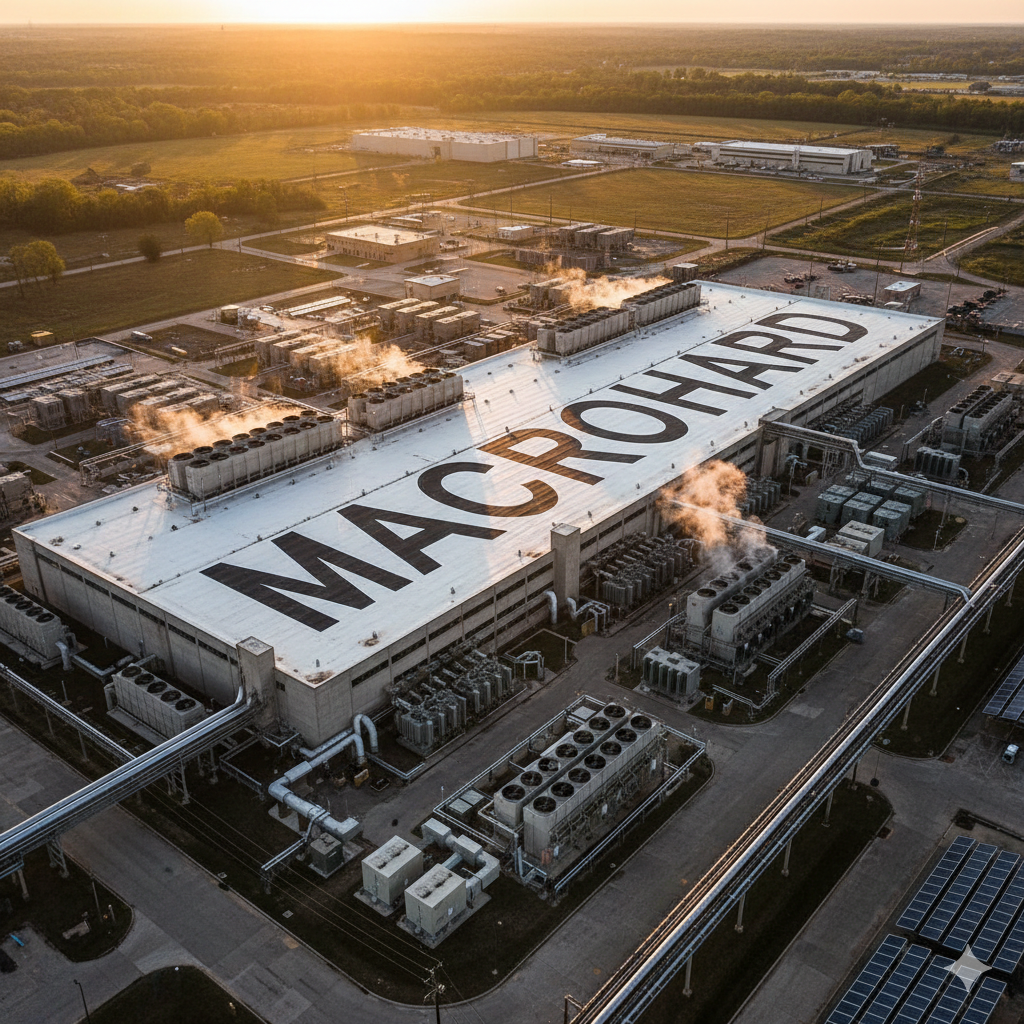
Stylized Pic of "MACROHARD" roof sign on xAI's Colossus II supercomputer in Memphis
Introduction
In this follow-up piece, I dive deeper into the high-stakes realities of choosing an AI platform today. Here’s what each section covers and what you’ll take away:
The Real-World Lock-In Risk — You’ll see exactly why committing to the wrong AI platform can become as painful and expensive as being stuck on the wrong productivity suite for a decade — with concrete examples of what that looks like in practice.
Elon Musk’s Macrohard Play — You’ll learn how Musk is directly targeting Microsoft’s core business with a new AI-driven software initiative called Macrohard, complete with the massive roof sign on xAI’s Memphis supercluster — and what it could mean for enterprises betting on Azure AI / Copilot.
Why This Decision Must Be Made at the Top — You’ll understand why the primary AI platform choice is no longer an IT or innovation call — it’s a corporate strategy decision that belongs at the CEO and board level, and why delegating it creates long-term damage.
The Race Is Narrowing to Two Horses — You’ll see my updated view: why I now believe the 2026+ AI platform race is increasingly becoming Musk (xAI) vs. Huang (NVIDIA), with the others likely falling into supporting roles.
Historical Market Patterns — You’ll learn the consistent historical evidence from mature tech markets showing why there will not be eight winners — only 1–2 dominant platforms plus a few strong contenders.
Execution Culture > Strategy — You’ll discover why The CDX Method teaches that execution culture is far more important than strategy when the future is unpredictable — and how the best execution cultures win when surprises inevitably arrive.
My Own Current Practice — You’ll get a transparent look at how I’m using Grok in my own company today while deliberately staying flexible as NVIDIA’s capabilities expand.
Let’s get into it.
Imagine waking up to realize your entire company is locked into the wrong productivity suite. Your spreadsheets don’t play nicely with partners, your documents are incompatible with key collaborators, your collaboration tools lag behind the market, and migrating would cost tens or hundreds of millions while taking years of disruption. That exact scenario is now playing out in real time with AI platforms.
Elon Musk has been clear about his ambitions here. He’s building a “purely AI software company called Macrohard” under xAI — a tongue-in-cheek but very real project to simulate and ultimately challenge software giants like Microsoft. Macrohard is already branded prominently: Musk had the word “MACROHARD” painted in massive letters on the roof of xAI’s Colossus II supercomputer cluster in Memphis, Tennessee — big enough to be read from space. He’s described it as a multi-agent AI system designed to automate software development, operations, and creation at scale, effectively creating an AI-powered equivalent of Microsoft’s productivity and enterprise stack without traditional human-heavy development.
If xAI succeeds in positioning Grok + Macrohard as the default AI layer for spreadsheets, word processing, code generation, enterprise search, data analysis, agentic workflows, and more — companies that bet heavily on Microsoft Azure AI / Copilot today could find themselves in the same position as organizations that doubled down on Lotus 1-2-3, WordPerfect, or Netscape in the 1990s: technically functional, but strategically disadvantaged and extremely expensive to escape.
This is why I keep stressing: the primary AI platform decision is not an IT or innovation decision — it is a corporate strategy decision that belongs at the CEO / board level. Once embedded in workflows, data pipelines, fine-tuned models, team expertise, and organizational processes, the switching costs become prohibitive — just like legacy ERP or core cloud migrations today.
Given this reality, my view has sharpened further:
I now believe the 2026+ AI race is increasingly becoming a two-horse contest: Elon Musk (xAI) versus Jensen Huang (NVIDIA).
The others — Microsoft, Google, OpenAI, Anthropic, Meta, Amazon — will not disappear, but I expect them to gradually fall into supporting, niche, or ecosystem roles rather than true platform leadership.
Why? Historical patterns in maturing technology markets are remarkably consistent:
Desktop operating systems → Windows captured ~90%+ share
Web search → Google reached ~90%+ globally
Web browsers → Chrome dominates with 65%+ share
Smartphone OS → iOS + Android together exceed 99%
Cloud infrastructure → Top 3 (AWS, Azure, Google Cloud) control ~66% of the market, with the rest fragmented
Mature platform markets almost always consolidate into 1–2 dominant players plus a few strong #2/#3 contenders. They rarely sustain 6–8 equal winners. Winner-take-most (or winner-take-all) dynamics prevail once network effects, developer lock-in, switching costs, and execution advantages compound. There will not be eight winners in AI platforms.
That is why execution culture — not just strategy — becomes decisive. As The CDX Method postulates, our guesses about the future are almost always wrong. Strategies will always have to be adjusted, often radically. The world can change dramatically: geopolitical conflict could disrupt Taiwan’s semiconductor supply chain (where most advanced chips are manufactured), a new technical breakthrough could emerge from an unexpected source, regulatory shifts could reshape the landscape overnight, or macroeconomic shocks could alter capital availability and investment priorities.
Those organizations and leaders with the strongest execution culture adjust the fastest and most effectively when reality diverges from the plan.
Between Musk’s demonstrated ability to defy odds (and his new Macrohard push directly targeting Microsoft’s core) and Huang’s unmatched execution machine at NVIDIA, I see these two as the most likely to shape the AI platform landscape of the next decade.
A note on my own current practice In my own company, I am currently using Grok heavily — it’s fast, uncensored, and increasingly capable for real work. But I’m deliberately keeping our stack flexible and multi-model capable. As NVIDIA continues to add more powerful models, inference tools (NIM), and full-stack capabilities (Nemotron, Cosmos, Alpamayo, GR00T), I’m watching closely to see how quickly they close the gap on usability and ecosystem maturity. I don’t believe in single-vendor lock-in — especially not yet — because the race is still moving too fast.
What do you think? Do you see the race narrowing to Musk vs. Huang, or do you believe Microsoft or Google will retain platform supremacy? And how are you approaching AI platform decisions in your own organization right now?
I’d love to hear your perspective.
#AI #Leadership #TheCDXMethod #FutureOfWork #TechStrategy