
AI-Washing: When “Reasons” Are Just Excuses for Poor Execution and Recurring Layoff Cycles
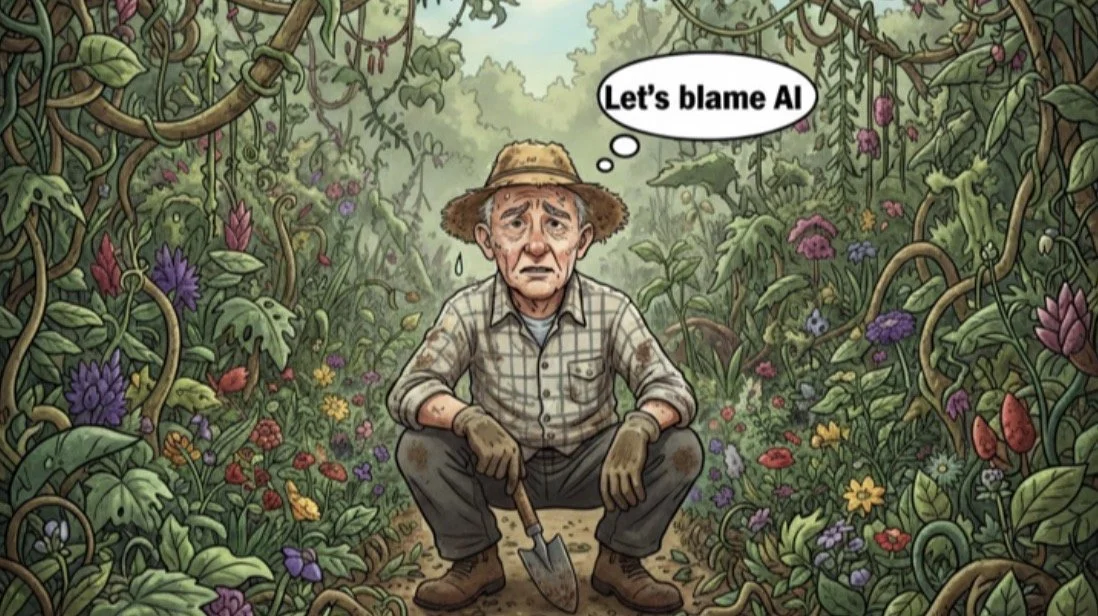
In the corporate world, especially amid the ongoing AI hype of 2026, layoffs are frequently packaged with polished public relations (PR) narratives. Leaders announce cuts as bold, forward-looking moves—often blaming artificial intelligence for “driving efficiency” or “restructuring for the future.” These are presented as reasons: strategic necessities in a tech-disrupted landscape.
But too often, they are excuses. The real underlying variable? Poor execution—over-hiring during growth spurts, unchecked siloed structures, and failure to address root inefficiencies. PR spins these as visionary pivots, masking mismanagement. The pattern repeats: costs and layers “grow back like weeds,” leading to yet another round of layoffs. This isn’t innovation; it’s a symptom of organizations that treat symptoms instead of curing the disease.
This cycle is depressingly familiar, as explored in my book, Develop Business Execution Superpower With The CDX Method. In the section “In Practice – The False Bravado of Most Corporate Restructuring,” I describe how companies miss earnings, announce sweeping layoffs to eliminate “unproductive layers,” and leaders congratulate themselves on tough choices. Yet soon after, the same earnings shortfalls recur, and more “unnecessary” costs magically appear for trimming. The question every investor—and leader—should ask: Why did these costs exist in the first place? Is this not mismanagement? Are you undermining Dynamic Execution that could actually deliver strategy?
AI-Washing: Excuses Masquerading as Reasons
AI-Washing elevates this dynamic to new heights. Executives invoke AI as the reason for job cuts: automation makes roles redundant, freeing resources for “big bets” on innovation. It sounds progressive and unavoidable. In reality, it’s frequently an excuse for deeper execution failures.
2025 saw major examples: Amazon cut ~14,000 corporate roles while touting AI investments; Microsoft shed ~15,000 in rounds linked to AI-driven reallocations; Salesforce highlighted its Agentforce AI automating support after thousands of departures. Challenger, Gray & Christmas tied AI to about 55,000 U.S. job losses that year—a notable but small slice of the 1.17 million+ total cuts, most driven by economic realities and post-pandemic corrections.
These announcements frame AI positively for investors, but they sidestep the underlying variable: why were those inefficiencies baked in? Why the repeated need for “rebalancing”?
The Real Underlying Variable: Why Costs Grow Back Like Weeds
The metaphor of costs “growing back like weeds” captures the essence perfectly. Superficial cuts remove visible overgrowth, but without addressing roots—unresolved “white space” conflicts between functions—the problems regrow. Ad-hoc fixes sprout: extra middle managers, internal negotiators, troubleshooters. Each feels justified in isolation, but they accumulate bureaucracy, slow decisions, and grant veto power over change.
Retired IBM CEO Ginni Rometty addressed similar themes on the Lex Fridman Podcast (Episode #362, March 2023). She spoke candidly about the temptations of bureaucracy in large organizations, the pressures of maintaining speed amid transformation, and IBM’s multi-year struggles with stagnation, portfolio shifts (divestitures and reinvestments in cloud/AI), and persistent organizational drag. While not using the exact “weeds” phrase, her reflections highlight how legacy structures and inefficiencies can resurface without deep, structural fixes—echoing the cycle where cuts treat symptoms, but unaddressed white-space issues cause problems to recur.
In my book, I call this an Execution Barrier: Middle management expansion in traditional functional organizations. Layers pile up to manage inter-silo friction, impeding Dynamic Execution. The damage exceeds salary costs—lost momentum, stifled innovation.
The enlightened path? Manage by Enterprise Cross-Functional Processes (Enterprise CPs) from The CDX Method. Scrutinize each process: Ensure every step and role adds real value. Staff based on Core Process requirements, not functional daydreams. This roots out non-essential work and prevents regrowth.
In the AI era, this means using AI as a genuine enabler—not an excuse for blunt cuts. If AI automates tasks, reinvest in upskilling or new value creation. AI-Washing lets leaders avoid owning why inefficiencies built up. Investors: Demand clarity. Are these real reasons or excuses? Would Enterprise CPs stop costs from creeping back?
Breaking the Cycle: Focus on Root Causes, Not PR Excuses
AI offers real potential for productivity—if execution is strong. But rash, excuse-driven cuts erode trust, drive talent loss, and hinder true progress.
Leaders: Stop the false bravado. Confront the underlying variables—align around value-adding processes, not silos. Investors and teams: Look beyond PR. Insist on transparency about real execution gaps.
#AI #Leadership #BusinessExecution #CorporateStrategy #TheCDXMethod
(Adapted from sections in my book Develop Business Execution Superpower With The CDX Method, including “In Practice – The False Bravado of Most Corporate Restructuring” and “An Execution Barrier - Middle Management Expansion.” Insights also drawn from Ginni Rometty on Lex Fridman Podcast #362: https://lexfridman.com/ginni-rometty)