
Why I Hate the Term “Strategy Execution” — And What Great Leaders Do Instead
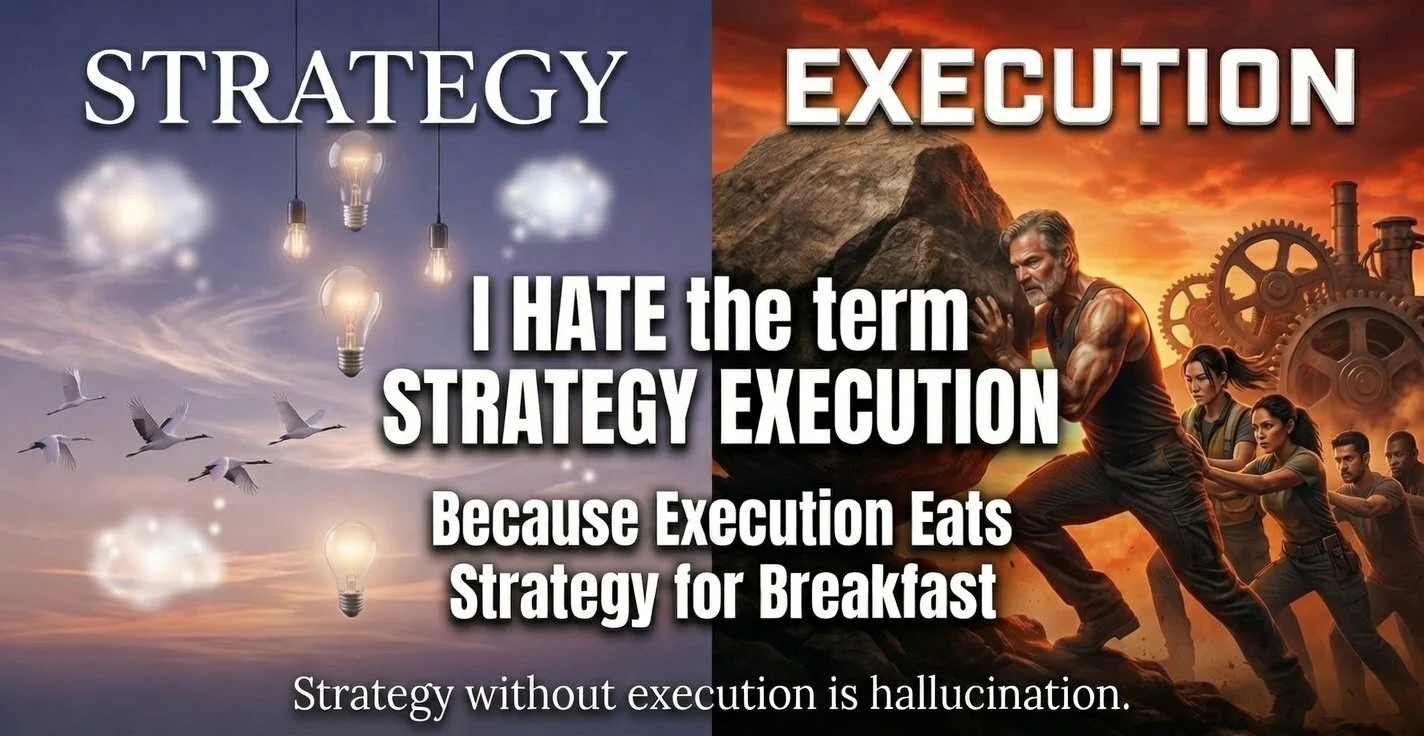
The term "Strategy Execution" is often the first step towards disaster. It elevates Strategy while making Execution feel like an afterthought.
Stop Calling It "Strategy Execution;" Execution Is the Main Job.
I’ve spent years leading teams across research, engineering, manufacturing, sales, marketing, supply chain, human resources, and general management. I’ve implemented Deming, Six Sigma, Lean, and many other well-known execution approaches. Yet nothing frustrates me more than hearing leaders casually talk about “strategy execution.”
The term itself bothers me. It quietly elevates strategy, the glamorous thinking, the bold offsites, the big-picture brush strokes, while making execution sound like a mere follow-on activity. Something tactical. Phase 2. The less important part.
In reality, the opposite is true.
Execution is the hardest and most important work of leadership. A brilliant strategy poorly executed dies in the marketplace. A solid strategy, relentlessly and tenaciously executed, usually wins.
Listen to the some of the all time execution greats:
Larry Bossidy, former CEO of Honeywell and co-author of the classic book Execution: The Discipline of Getting Things Done, put it best: “Execution is a discipline, and integral to strategy. Execution is the major job of the business leader.”
Not a side activity. Not Phase 2. The major job.
Steve Jobs famously said: “To me, ideas are worth nothing unless executed. They are just a multiplier. Execution is worth millions.”
And the twist on the old quote that resonates deeply with operators everywhere: “Execution eats strategy for breakfast.”
Because here’s the truth most strategy decks don’t want to admit: Strategy without execution is hallucination. Execution without perfect strategy is still progress, and it gives you real data to refine or pivot your direction.
The world changes fast. Strong execution creates learning, momentum, and adaptability. Poor execution makes even the best strategy irrelevant.
The Real Job of Leaders: Demand Personal Responsibility
Too many leaders treat execution as something they can delegate. They retreat to strategy sessions, paint with broad brushes, and then become frustrated when “the organization fails to deliver.”
Here’s the hard truth I learned both in business and during my battle with cancer: You cannot delegate the creation of an execution culture.
After my cancer diagnosis, I couldn’t pay someone else to get fit for me. I couldn’t assign the work of becoming strong enough to survive whatever came next. I had to take personal responsibility, every single day.
The same principle applies in business.
Your company will face mortal threats: disruptive competitors, economic shocks, pandemics, or rapid technological change. Strategy alone won’t save you. The only sustainable advantage is an organization that can pivot quickly and execute with tenacity and grace.
That starts with the leader accepting full personal responsibility. Not mere “management support.” Not hiring a “tough guy” to play bad cop while you remain the visionary. Real leadership means developing profound knowledge of execution and reinforcing it every single day.
When leaders detach from execution, organizations naturally slide into lethargy. People self-optimize their own processes. Variation increases. Change becomes painful and is resisted by invisible “corporate antibodies.”
Extensive change management programs are often just a symptom of a weak execution culture. In a strong one, change is simply part of the daily operating rhythm — expected, embraced, and executed with confidence.
Build Tenacity Through Your Employer Brand — Forever
Execution culture isn’t a one-time project you can launch and forget. It demands constancy of purpose and continual reinforcement.
I’ve seen too many companies roll out exciting initiatives with posters, slogans, and fanfare, only for them to fade into “flavor of the month” cynicism. Employees learn to become conditional supporters, quietly waiting for the latest effort to die so they can return to business as usual.
Instead, make execution the permanent foundation of your employer brand. Emotionally engage every employee with the execution culture, forever.
Your employer brand should not have a separate “execution initiative” name. It should be your company brand, synonymous with disciplined, tenacious delivery.
When employees talk about working at your company, you want to hear genuine pride:
“Problems are openly discussed and solved quickly.”
“My work matters. I’m making a real difference.”
“We expect change; and we’re really good at it.”
Outsiders should listen and think, “Working there feels like joining a cult, in the best way.”
Avoid the common traps: Don’t create competing internal brands. Don’t rely on slogans, memes, or motivational posters. Without real cultural reinforcement, they only signal weakness. A vibrant execution culture doesn’t need cheerleading; performance and pride are built in.
From My Cancer Fight to Corporate Reality
Surviving cancer taught me that tenacity is everything. It forced me to redirect my career toward execution, and I saw firsthand how even valuable frameworks become fragmented and difficult when they lack a common language and cohesive approach.
Great leaders don’t just create strategy. They demand leadership and take personal responsibility. They make execution the permanent foundation of their employer brand. And they reinforce it with constancy of purpose — forever.
That’s how ordinary companies become unstoppable.
If you’re tired of beautiful strategies that go nowhere and want a practical way to build a tough, graceful, tenacious execution culture, I’ve distilled these ideas into a comprehensive system called The CDX Method (Core Dynamic Execution). It integrates the best parts of proven execution approaches into one actionable framework.
I’d be happy to hear your thoughts. Does the term “strategy execution” bother you too? Have you seen leaders successfully make execution the true heart of their culture — or watched it fail when it was treated as something to delegate?
Disclaimer: These are my personal views based on my experience helping organizations improve execution. Always consult qualified advisors for your specific situation. The CDX Method is a proprietary framework; Warranties of merchantability or other representations of fitness for a particular purpose are disclaimed. This is not investment, legal, or professional advice. Always conduct your own due diligence.
#Execution #Leadership #TheCDXMethod #CorporateCulture #LeadershipDevelopment