
AI Will Change the UI (User Interface), But SaaS Will Not Die; and Garbage In - Garbage Out Still Reigns
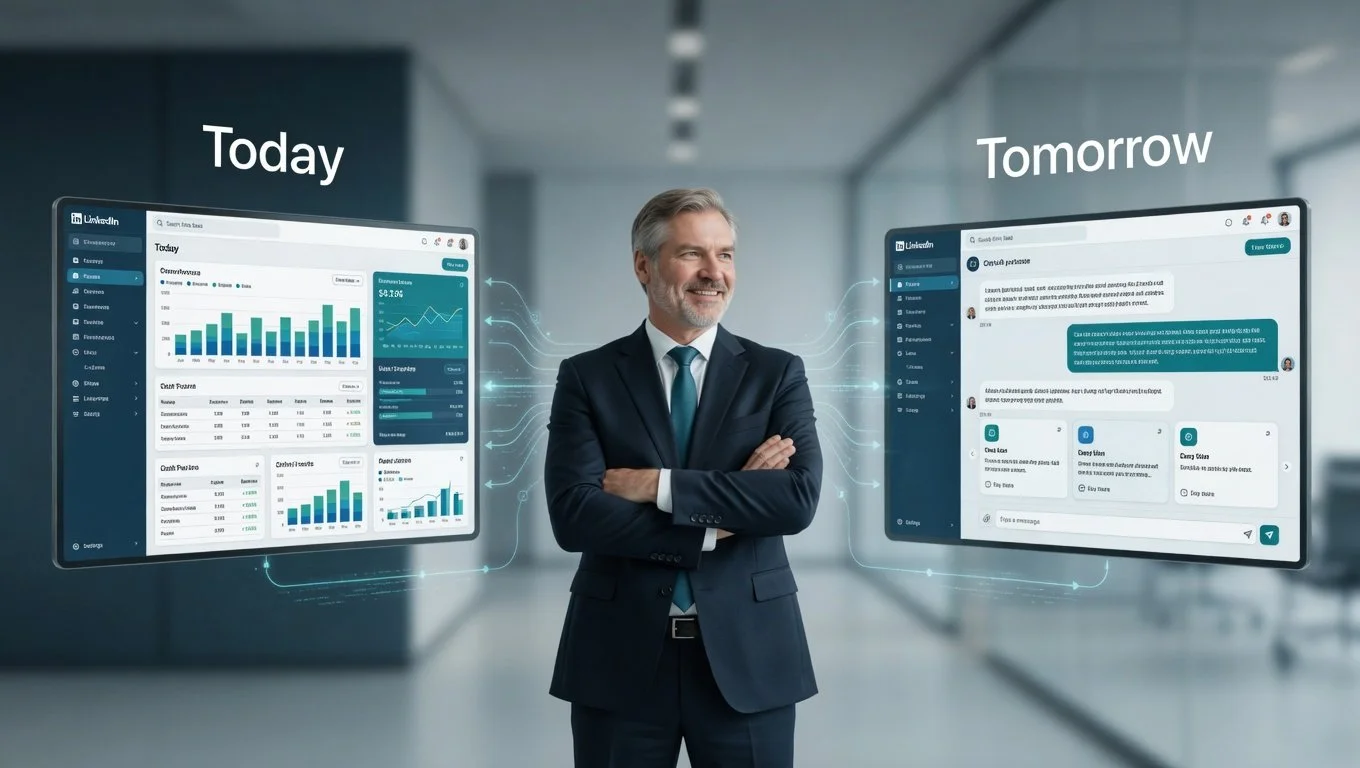
Today's SaaS dashboards will evolve to tomorrow's conversational interface where users talk to AI agents instead of clicking through Apps
Musk Says Traditional Software Is About to Disappear — So Why Am I Still Telling CEOs to Double Down on SaaS?
If Elon Musk is right, and in 5 to 6 years most traditional apps and interfaces will vanish, then why are smart enterprises still pouring millions into SaaS?
Because the ones who understand what’s really happening aren’t wasting their money. They’re building the invisible foundation that AI agents will run on. But there’s a catch most are missing.
The Market Reality in 2026
76–78% of private B2B SaaS companies have already embedded AI.
Gartner predicts ~80% of enterprise applications will include generative AI by year-end.
AI-native SaaS categories are growing over 100% YoY.
Musk’s vision is directionally correct: in the future most users won’t open apps. They’ll speak to AI agents that orchestrate tasks across systems, bypassing traditional interfaces.
Left vs. Right — Still the Core Framework
Left (Customer-Facing): With AI, the front-end user interface is changing dramatically — chat layers, conversational experiences, and agentic front-ends that close the next sale (e.g., Salesforce, Microsoft) are becoming table stakes and will be increasingly absorbed by general agents.
Right (Bespoke/Internal): The backend remains critical. Proprietary workflows, rich data moats, compliance engines, and integration fabric (e.g., ServiceNow, Workday, SAP) are where enduring competitive advantage lives. AI agents still require great, clean, reliable data from these backends to function effectively, making strong SaaS platforms even more valuable as trusted infrastructure.
See My article defining this framework: Left: What Closes Your Next Sale. Right: What Keeps You in Business for the Next Decade
And here is The CDX Method critical insight: SaaS (and AI layered on top) still requires robust Core Processes. You cannot expect success if your work process that creates value today is poor. Implementing advanced SaaS or agentic systems on weak, variable processes is like building a skyscraper on sand; it collapses under its own weight.

This is exactly why The CDX Method is such a powerful precursor. It forces organizations to develop rock solid Core Processes first: consistency before perfection, relentless measurement, and the five Universal Characteristics of process beauty (Always Advance, Pull, Work Balance, Transparency, Decision Rights). Only then can SaaS and AI deliver their full potential.
The Hybrid Portfolio That Wins
Smart enterprises run a deliberate mix:
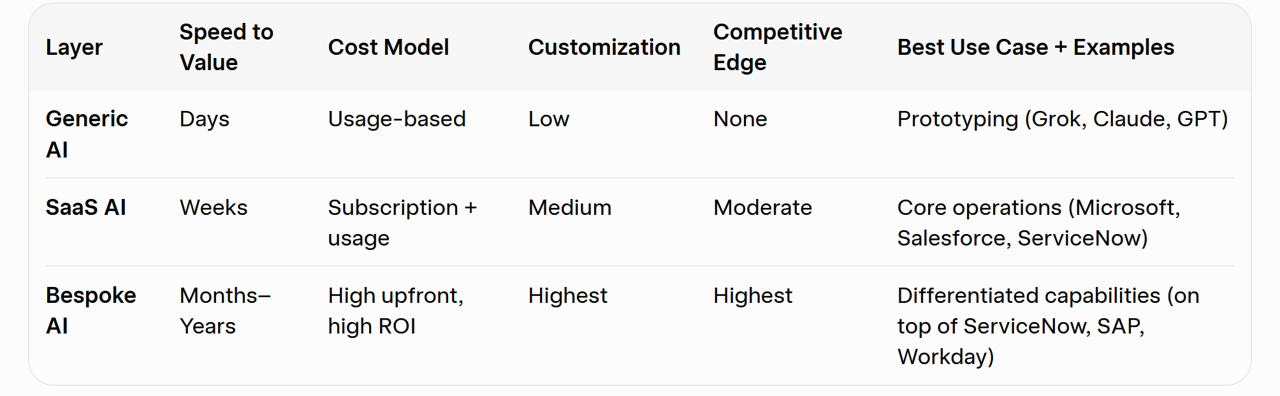
60–80% of needs are covered by strong SaaS platforms such as Microsoft, Salesforce, ServiceNow, and vertical specialists, with Generic for speed and Bespoke layered on top for true differentiation.
Game-Changer: AI Is About to Slash SaaS Configuration Pain
Configuration has always been one of the biggest SaaS headaches. AI changes that forever by letting you describe outcomes in natural language.
Platforms like Microsoft Power Platform, ServiceNow AI Agent Studio, and Salesforce Einstein now cut implementation time by 60–90%.
Yet AI configuration tools amplify success only on top of strong Core Processes. Without them, you simply automate inconsistency — and get inconsistent results faster.
Execution Is Still Everything (The CDX Method as the Essential Precursor)
The CDX Method provides the missing link that many SaaS and AI initiatives lack:
Develop robust Core Processes and minimize variability (consistency before perfection).
Measure everything using the CDX Value Specification (efficiency + effectiveness, Core Value + Core Variability).
Strive for the five Universal Characteristics of process beauty so your SaaS backends (Microsoft, Salesforce, ServiceNow, SAP, Workday) become reliable foundations for agents.
Weak Core Processes turn expensive SaaS implementations into technical mirages that fail to deliver. Strong ones turn SaaS into a multiplier: enabling agents, self-optimizing systems, and sustained competitive advantage.
The real differentiator is leadership and culture that builds this foundation first.
Practical Next Steps for Enterprise Leaders
Audit your SaaS stack (Microsoft, Salesforce, ServiceNow, SAP, Workday) through an agent configurable plus process robustness lens.
Apply The CDX Method principles to strengthen Core Processes before heavy SaaS/AI configuration.
Run a quick hybrid pilot: Generic agent + existing SaaS backend + one improved Core Process.
Ask your team: Are we treating configuration and processes as cost centers, or as the foundation for Right-side advantage in the agent era?
The software-eats-the-world thesis isn’t dying, it’s evolving. SaaS done right, on top of robust Core Processes, will be more valuable in 2030, not less.
This piece continues the series:
→ Left: What Closes Your Next Sale. Right: What Keeps You in Business for the Next Decade
→ Which Provider Will Dominate the AI 2026 Race?
→ Macrohard Versus Microsoft — It’s No Laughing Matter
All comments or questions are welcome!
#SaaS #EnterpriseAI #AgenticAI #TheCDXMethod #LeftVsRight #CoreProcesses #ExecutionCulture #Microsoft #Salesforce #ServiceNow
Disclaimer: These are my personal views based on my experience helping organizations improve execution. Always consult qualified advisors for your specific situation. The CDX Method is a proprietary framework; Warranties of merchantability or other representations of fitness for a particular purpose are disclaimed. This is not investment, legal, or professional advice. Always conduct your own due diligence. And I have been wrong many times before. Just ask my family. LOL. I certainly cannot predict what else will change in the future.