
The Pilgrims: Ruthless Executors Who Turned Starvation into a Thriving Business Empire 🚀
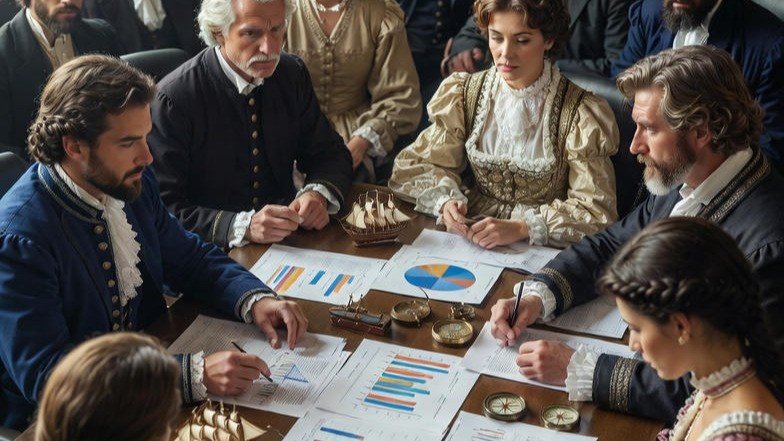
102 passengers. 90% mortality risk. A £1,800 VC deal from London merchants. The Pilgrims didn't just survive—they executed like a Silicon Valley startup, pivoting from failure to profitability in 3 years.
We romanticize them as buckled-shoe pilgrims. But strip away the Thanksgiving myth, and you'll find masterclass-level business execution that built Plymouth Colony into a self-sustaining powerhouse.
Here's how they did it—and what it teaches us about turning vision into results in 2025.
1. Crystal-Clear Business Model: Venture Capital with Teeth
No vague mission statements. The Merchant Adventurers funded ships, tools, and trade goods in exchange for 50% of all profits for 7 years.
KPIs were non-negotiable:
Extract furs, timber, fish
Remit yields annually
Survive the first winter
Lesson: Align incentives ruthlessly. Your board/investors want returns, not vibes.
2. The Pivot That Saved Them: From Socialism to Profit-Sharing
Initial model: Communal ownership. Everyone works, everyone eats equally.
Result: Disaster. As Gov. William Bradford wrote, "The strong ate up the weak." Half died by 1621.
1623 Pivot: Private plots. Grow your own, trade the surplus.
Corn yields tripled. First fur exports: £300/year. Investors repaid early.
Lesson: Test fast, iterate faster. Data > ideology. (Bradford: "This made all hands very industrious.")
3. Operations in Crisis Mode: No Room for Slack
Supply Chain: Rationed to the bone. Turned wampum beads into regional currency—Plymouth minted its own by 1630s.
Partnerships: 1621 treaty with Massasoit = non-compete deal. Guns + tools for corn seeds + peace.
Talent: Meritocracy. Bradford governed 30+ years, but delegated: Standish (security), Hopkins (trade). Idlers? Whipped or exiled.
From 53 survivors to 2,000 colonists by 1640. Revenue mix: Furs 60%, timber 20%, fishing 20%.
Lesson: 100% utilization. Hire specialists. Enforce accountability.
4. The Exit: Bought Freedom, Scaled the Empire
1628: Bought out investors for £1,800. Clean exit. Reinvested in expansion—satellite towns, Massachusetts Bay alliance.
Execution Enablers:
Fortified defenses (70-ft palisade by 1622)
Innovation: Fish-fertilized crops (40 bu/acre vs England's 20)
Financials: Colony bills backed by furs = stable currency
Modern Lessons for Founders & Executives
Measure outputs, not inputs – Private plots proved it
Pivot on data – 1623 wasn't theory; it was survival math
Incentives win – Free riders kill companies
Scale through partnerships – Massasoit deal lasted 50 years
The Pilgrims turned a 90% failure-rate venture into 300 years of success. Not by prayer alone—by weekly town meetings, zero tolerance for BS, and relentless execution.
In our world of endless runway extensions and "growth hacking," Plymouth reminds us: Execution beats vision every time.